Can Gum Grafting Help With Tooth Sensitivity From Exposed Roots?
Yes, gum grafting can sometimes help when tooth sensitivity is related to gum recession and exposed root surfaces. A graft may cover or help protect an exposed root, but it is not the right answer for every sensitive tooth. Sensitivity can also come from enamel wear, tooth decay, cracks, clenching, recent dental work, or inflammation.
At Downtown Periodontal Group in Vancouver, a periodontal assessment can help clarify whether gum grafting, monitoring, changes to home care, or another approach should be discussed.
If sensitivity seems connected to a receding gumline or an exposed root, gum grafting may be one option to ask about. The right next step depends on what is causing the sensitivity and what a periodontist sees during an assessment.
Why Can Exposed Tooth Roots Become Sensitive?
Tooth roots are not protected the same way as the visible crown of the tooth. The upper part of a tooth is covered by enamel, which is a hard outer layer. The root surface is usually protected by gum tissue instead.
When the gums recede, part of the root can become exposed. That exposed root surface can react more easily to cold drinks, brushing, sweet foods, or even cool air. The Ontario Dental Association notes that tooth sensitivity can occur when gums recede and tooth roots are exposed.
Sensitivity from exposed roots can feel like a short, sharp zing. It may happen in one tooth or along a few teeth where the gumline has moved. Some people also notice tenderness when brushing near the gumline or when using certain oral-care products.
Root sensitivity is not always caused by gum recession, though. A cavity, cracked tooth, worn enamel, old filling, or bite pressure can also make a tooth sensitive. That is why persistent or worsening sensitivity is worth checking rather than guessing at the cause.
How Can Gum Grafting Help an Exposed Root?
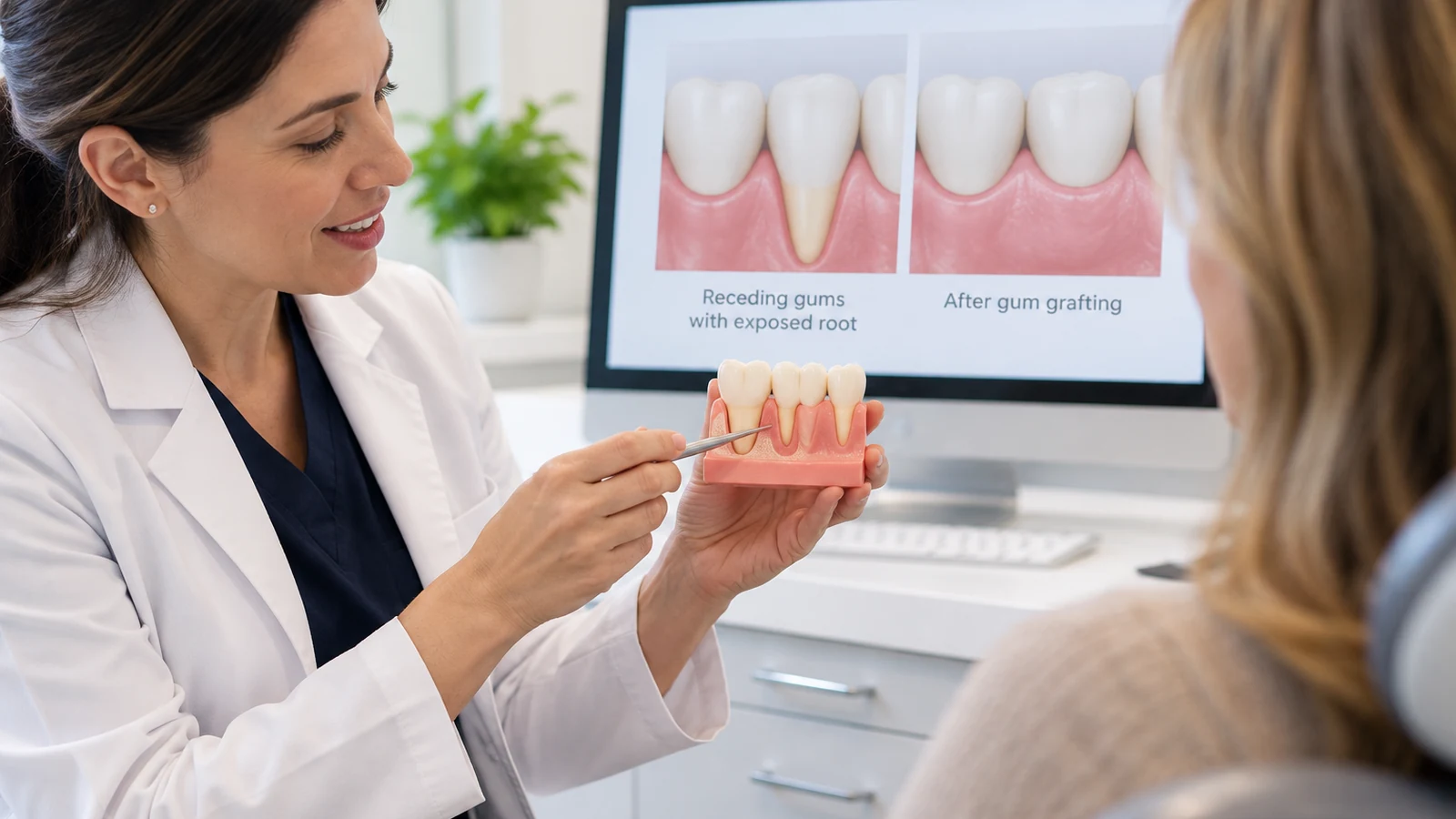
Gum grafting is a periodontal treatment that may be considered when gum recession has left a root surface exposed. The goal is to add or reposition gum tissue in a way that helps protect the area and improves soft-tissue support around the tooth.
For someone with exposed-root sensitivity, a periodontist may discuss gum grafts in Vancouver if the recession pattern, gum tissue, and symptoms suggest that grafting could be appropriate. In some cases, covering or reinforcing an exposed root area may reduce irritation and make the area easier to keep clean.
Grafting is not a promise of complete root coverage or complete relief from sensitivity. The final recommendation depends on several details, including the shape of the recession, the health of the surrounding tissue, the tooth position, oral hygiene habits, and whether the recession is stable or still progressing.
Gum grafting is best understood as a treatment option, not an automatic fix. It may help protect exposed root surfaces in selected cases, but sensitivity can have more than one cause.
Does Every Sensitive or Receding Tooth Need a Gum Graft?
No. A sensitive tooth or a receding gumline does not automatically mean you need a gum graft. Some cases are better managed by monitoring the area, adjusting brushing technique, treating another dental issue, or addressing inflammation first.
A periodontist may look for signs that recession is getting worse, that the exposed area is difficult to clean, or that the gum tissue around the tooth is thin or fragile. If the recession is mild and stable, treatment may be more conservative.
Other steps may be discussed before or instead of grafting, depending on the cause of sensitivity. These can include:
- using a softer brushing technique
- switching to a soft-bristled toothbrush
- using sensitivity toothpaste as directed by a dental professional
- treating decay, cracks, or worn restorations if present
- managing gum inflammation or periodontal disease
- monitoring recession over time
The important point is that treatment should match the cause. Tooth sensitivity feels simple from the patient side, but the reason behind it can vary.
What Factors Does a Periodontist Consider Before Recommending Grafting?
Before recommending gum grafting, a periodontist considers whether the exposed root sensitivity is likely to improve with grafting and whether the area is suitable for treatment. The decision is based on the tooth, the gum tissue, and the patient’s overall oral health.
Common assessment factors include:
- the amount and location of gum recession
- whether the recession is stable or progressing
- the thickness and health of the surrounding gum tissue
- sensitivity, tenderness, or difficulty brushing the area
- plaque buildup, inflammation, or signs of gum disease
- bite pressure, clenching, or tooth position
- the condition of the exposed root surface
- the patient’s comfort, goals, and medical history
If gum disease or active inflammation is present, that may need attention before a graft is considered. Government of Canada oral-health guidance describes gum disease as inflammation affecting the gums, bones, and tissues that support the teeth. In practical terms, healthier tissue gives the area a better foundation for any treatment plan.
A periodontist may also talk through what grafting can and cannot reasonably do for a specific tooth. That conversation matters because root coverage and sensitivity improvement can vary from person to person.
What Happens During a Periodontal Assessment?
A periodontal assessment looks at the gum tissue, root exposure, tooth support, and possible causes of sensitivity. The goal is to understand why the area is sensitive before deciding whether gum grafting belongs in the treatment discussion.
During an assessment, a periodontist may review your symptoms, ask when sensitivity happens, check the gumline, measure areas of recession, and look for inflammation or changes in tissue support. They may also review dental history, brushing habits, bite pressure, and any recent dental work that could be contributing to sensitivity.
If you are unsure when sensitivity or recession should be checked, Downtown Periodontal Group’s page on when to see a periodontist may help you understand situations where a periodontal opinion can be useful.
Persistent sensitivity near the gumline is a good reason to ask for guidance, especially if you can see recession or exposed root surfaces. An assessment can separate routine sensitivity from issues that need periodontal attention.
For patients in Vancouver dealing with exposed-root sensitivity, the value of an assessment is clarity. You do not have to decide on your own whether the problem is brushing-related, recession-related, inflammation-related, or something else.
Frequently Asked Questions About Gum Grafts and Root Sensitivity
Can gum recession cause sensitivity to cold?
Yes, gum recession can cause sensitivity to cold when the root surface becomes exposed. The root is usually protected by gum tissue, so it can react more strongly once that protection is reduced. Cold sensitivity can also come from other dental concerns, so it should be assessed if it persists or changes.
Will a gum graft stop all tooth sensitivity?
A gum graft will not necessarily stop all tooth sensitivity. Grafting may help in selected cases where exposed root surfaces are part of the problem, but sensitivity can also come from enamel wear, tooth decay, cracks, bite pressure, or inflammation. A periodontist can help determine whether gum grafting is likely to be relevant to your symptoms.
Can exposed roots be covered completely?
Exposed roots can sometimes be covered or partly covered, but complete coverage cannot be promised. The result depends on the amount of recession, the position of the tooth, the surrounding gum tissue, and other individual factors. A periodontal assessment gives a more realistic sense of what may be possible.
How do I know if I need a gum graft?
You will not know for sure without an assessment. Signs that it may be worth asking about gum grafting include visible recession, exposed root surfaces, sensitivity near the gumline, gum tissue that seems to be thinning, or recession that appears to be getting worse. The recommendation should come from a professional evaluation, not from symptoms alone.
Can I see a periodontist without a referral?
Booking requirements can vary by practice and by situation. If you have gum recession, exposed roots, or persistent sensitivity, you can contact the office to ask what information is needed and whether a referral is required. If your dentist has already noted recession or bone/tissue concerns, that information may be helpful to bring forward.
Talk to Downtown Periodontal Group About Exposed-Root Sensitivity
Tooth sensitivity near the gumline can be frustrating, especially when it keeps coming back or makes brushing uncomfortable. If you have gum recession, exposed roots, or sensitivity that seems connected to changes at the gumline, a periodontal assessment can help you understand what is happening and what options may be appropriate.
Downtown Periodontal Group serves patients in Vancouver and can assess whether gum grafting should be discussed for your situation. Gum grafting may not be the right recommendation for every patient, but getting the area checked can give you a clearer path forward.
To ask about next steps, contact Downtown Periodontal Group or call 604.602.0442.
Filed under Periodontics . You can follow any responses to this entry through the RSS 2.0 feed. You can leave a response.
Tags: exposed roots, Gum grafts, gum recession, tooth sensitivity