
Why Do Deep Gum Pockets Matter—and What Can a Periodontist Do About Them?
Deep gum pockets matter because they can be difficult to keep clean and may occur alongside inflammation or damage to the tissues supporting a tooth. A periodontist interprets the readings together with bleeding, gum attachment, bone levels and other findings. One number, by itself, does not tell you whether surgery is needed.
If your dentist has recommended seeing a gum specialist, ask which findings prompted the referral. You might have heard several measurements called out during an examination without knowing what they represented. Understanding those readings can make the next appointment less confusing and help you ask more useful questions.
At Downtown Periodontal Group in downtown Vancouver, a periodontal assessment connects those measurements to a diagnosis and an individual care plan. The goal is to understand where disease is present, what can be treated and how the result will be monitored.
What a gum-pocket measurement represents
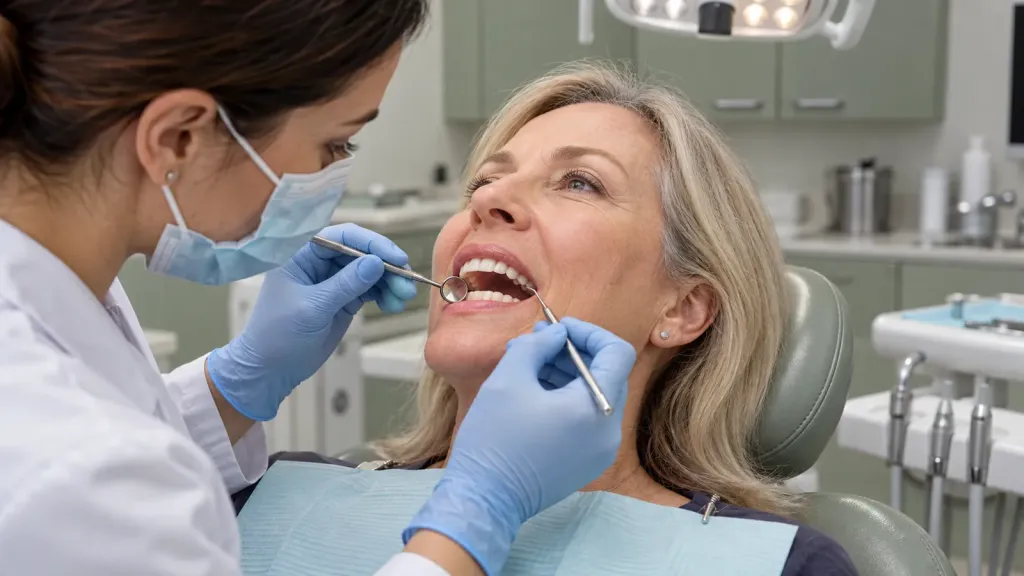
A gum-pocket reading measures the distance from the edge of the gum to the base of the space beside the tooth. The clinician uses a small measuring instrument called a periodontal probe and records readings at several points around each tooth.
These measurements are usually recorded in millimetres. As the National Institute of Dental and Craniofacial Research explains, healthy spaces are generally shallow, often one to three millimetres, while deeper readings can be a sign of periodontal disease. They are a reason to investigate, not a diagnosis to make from a chart at home.
The location matters as much as the number. One side of a molar may have a different reading from another, and a reading at the back of the mouth may need different cleaning advice from one between the front teeth. Ask the clinician to show you the specific areas of concern.
You may also hear about recession, where the gum edge has moved down the tooth, and attachment loss, which describes loss of supporting attachment. These are related observations, but they are not interchangeable with pocket depth. The practice’s information about periodontal disease and gum health provides further background on the tissues involved.
Why deeper readings need context
A deeper reading needs context because the position and condition of the gum can affect what is measured. Swelling can increase the depth of the space without telling the whole story about underlying support. Conversely, a receded gumline can leave a tooth with lost support even when the pocket does not sound particularly deep.
This is why your periodontist looks beyond a single threshold. Is the area inflamed? Does it bleed during probing? Is there attachment loss or bone loss? Have comparable readings changed since an earlier assessment? Those questions are more informative than deciding that one particular number always means one particular treatment.
The AAP’s periodontal disease classification resources describe a framework that considers disease severity, complexity and progression risk. If you are given a stage or grade, ask what it means in your case and how it affects the care plan.
You do not need to memorize the classification. What matters is understanding the explanation behind it. A useful question is, “Which findings show that I have lost support, and which findings show inflammation that treatment is trying to reduce?” That invites a clearer discussion than asking whether the biggest number on the chart is good or bad.
What a periodontist evaluates alongside pocket depth
A periodontist considers the whole pattern of findings, including the gums, teeth, bone and health factors that may affect disease or healing. The examination is intended to establish both what is happening now and what could make ongoing care more difficult.
The assessment may include:
- Bleeding, swelling and the amount of plaque or hardened deposits.
- Recession and the level of attachment around individual teeth.
- Tooth movement, bite-related concerns and areas that are difficult to clean.
- Bone levels on appropriate dental images.
- Previous treatment and how the tissues responded.
- Medical history, medicines, diabetes and tobacco use.
Bring an accurate medication list and tell the team about changes in your health. If another dental office has relevant X-rays or periodontal records, ask whether they can be transferred. Older records can help establish a history, although the clinician may still need current information.
Be open about home-care difficulties. A tight contact, limited hand movement or an awkward area around a restoration can make a generic instruction to floss unhelpful. Showing the team where you struggle allows them to recommend tools and techniques you can actually use. That discussion is part of treatment planning, not a test of whether you have been a “good” patient.
When scaling and root planing may be considered
Scaling and root planing may be recommended when deposits and disease below the gumline need professional treatment. It addresses areas a toothbrush cannot adequately clean and is commonly part of nonsurgical periodontal care.
The AAP’s explanation of nonsurgical treatments describes cleaning the affected root surfaces and emphasizes ongoing maintenance. Whether this is enough depends on the individual condition and the response after healing.
Downtown Periodontal Group provides scaling and root planing. If it is recommended, ask which areas need treatment, how comfort will be managed and when reassessment will take place. Also ask what temporary sensitivity or other changes you should report.
The follow-up appointment matters because the initial treatment and the tissue response are separate pieces of information. The periodontist can compare findings, review cleaning access and decide whether further care is appropriate. Do not assume that feeling better is the same as having completed the whole plan, or that a remaining deep area means the first treatment achieved nothing.
When surgical treatment may enter the discussion
Surgery may be discussed when the remaining disease, pocket anatomy or access problems cannot be adequately managed with nonsurgical care alone. It is not prescribed solely because one measurement exceeds a particular number.
One possible approach is pocket-reduction surgery, which can improve access to affected root surfaces and reshape tissues where appropriate. The exact procedure depends on the defect and treatment goals. A recommendation for surgery should include an explanation of why that approach fits the findings in your mouth.
Ask what the procedure is expected to improve, what its limitations are and what alternatives are reasonable. You should also understand potential changes such as recession or sensitivity, the expected recovery arrangements and the maintenance required afterward. Benefits and trade-offs may differ from tooth to tooth.
If several areas need care, ask how the work would be sequenced and whether any decisions depend on healing from earlier treatment. It is reasonable to request time to understand the plan and an estimate of the proposed care. Avoid comparing procedure names alone; the diagnosis and scope of treatment are what make an estimate meaningful.
Questions to ask about your periodontal findings
Ask questions that connect the diagnosis to an action and a follow-up measure. Knowing what will happen next is more useful than leaving with a list of pocket depths you cannot interpret.
Consider asking:
- Which teeth or sites need attention, and what makes those areas concerning?
- What does the examination show about inflammation, attachment and bone support?
- What is the first treatment step, and what is it intended to change?
- When will we reassess, and which findings will guide the next decision?
- Which cleaning tools fit the spaces in my mouth?
- How will periodontal maintenance be coordinated with my general dental care?
Tell the team if the proposed routine seems difficult to maintain. A complicated plan is worth simplifying where possible, and a demonstration can make an unfamiliar tool easier to use. Ask for the priority areas to be identified so you know where extra attention is needed.
Frequently Asked Questions
Does one deep pocket mean I have gum disease?
It needs assessment, but it does not establish the diagnosis by itself. The periodontist considers local tooth factors, inflammation, attachment and bone findings before explaining the cause and significance.
Can deep pockets improve with home care alone?
Improved cleaning can reduce inflammation, but home care cannot remove all hardened deposits beneath the gumline or replace professional treatment when it is needed. Ask what home care is expected to achieve in your specific situation.
Is scaling and root planing always the first treatment?
No single sequence fits every patient. The clinician considers the diagnosis, previous care, urgent concerns and treatment goals. Ask why the proposed starting point is appropriate for you.
Does every deep pocket need surgery?
No. Some areas respond to nonsurgical treatment and maintenance; others need a different approach. The decision considers the full findings and response to care, rather than pocket depth alone.
How are gum pockets monitored over time?
The team compares periodontal measurements and other signs at review visits, with imaging when clinically indicated. Ask how often you should attend and what changes would prompt an earlier appointment.
Discuss Your Questions With Downtown Perio Group
If you have been told you have deep gum pockets, contact Downtown Periodontal Group in downtown Vancouver to discuss an assessment or referral. Bring your questions about the measurements and the recommended care so the appointment can turn unfamiliar numbers into a plan you understand.