
Can Dental Implants Replace Several Missing Teeth Without an Implant for Every Tooth?
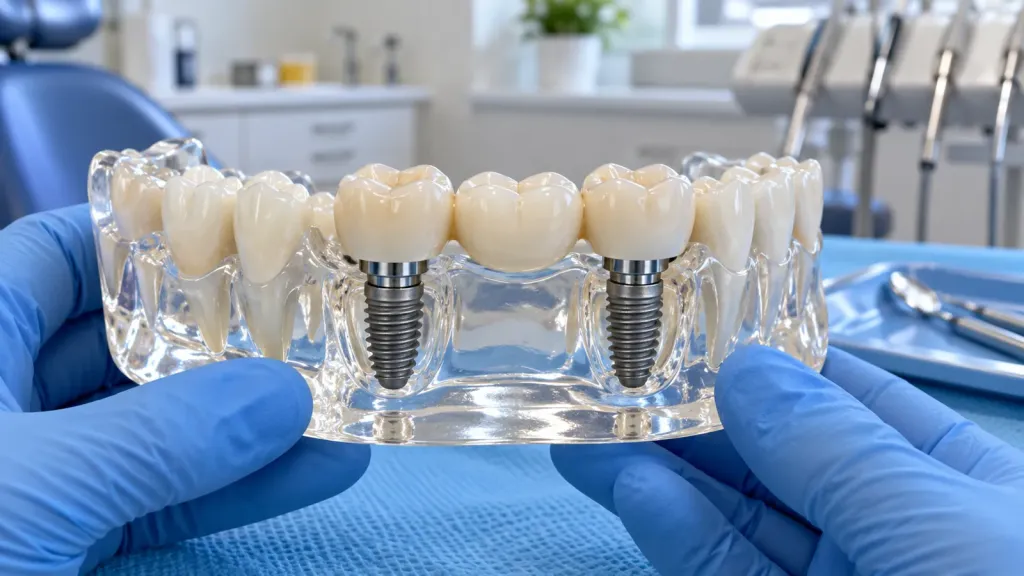
If you have three missing teeth, do you need three dental implants? Not necessarily. The number of replacement teeth you need and the number of implants used to support them are two different decisions.
An implant-supported bridge may replace several neighbouring teeth using fewer implants than replacement teeth. Whether that arrangement makes sense depends on where the gaps are, the available support and the design of the restoration. Counting empty spaces in a mirror cannot tell you the right number.
At Downtown Periodontal Group in Vancouver, implant treatment involves coordination between the periodontist and the dentist providing the replacement teeth. Understanding those roles can make your consultation easier to follow.
Implant, abutment and replacement tooth are different parts
People often use “implant” to mean the entire new tooth. More precisely, the implant is the part placed in the jaw to provide support. An abutment connects that support to the restoration, and the visible replacement tooth is part of the crown, bridge or other prosthesis.
For one missing tooth, treatment may involve an individual implant and crown. With several missing teeth, the arrangement may be different. A bridge joins replacement teeth together, so every tooth in that bridge does not necessarily have its own implant underneath it.
The Canadian Dental Association’s overview of dental implants provides background on these components. For your own plan, ask to see which parts sit below the gum and which parts replace the teeth you see.
That distinction also helps when reading an estimate. A line for implant placement may not include the entire process of making and fitting the final teeth.
How a bridge can replace more teeth than implants
Think of a bridge as a connected restoration with planned points of support. Some replacement teeth sit over the supporting implants, while others fill the space between them.
That does not mean any number of teeth can safely be supported by any number of implants. The design has to account for the span being replaced, the forces involved and the condition of the supporting areas. A plan that works for one person may be unsuitable for another person with the same number of missing teeth.
Nor is using fewer implants automatically the better choice. The useful question is why a particular arrangement is recommended for your mouth. Ask the team to explain how it supports the replacement teeth and how you will clean around it.
A drawing can help. You should be able to point to the missing teeth, the proposed implant positions and the restoration they will support without having to interpret unfamiliar terminology on your own.
Why the pattern of missing teeth matters
Three neighbouring missing teeth create a different planning problem from three missing teeth spread across the mouth. A single bridge cannot simply connect unrelated gaps without considering the teeth and structures between them.
The location of each space matters too. Your team will consider the available room and how the upper and lower teeth meet. Remaining teeth may also affect the choices.
Bring up your everyday concerns during this discussion. Perhaps food collects in a particular gap, you avoid chewing on one side or a removable appliance feels difficult to manage. These details help explain what you want treatment to address.
You can also ask about alternatives. Depending on the assessment, the discussion may include other implant arrangements, a different type of bridge or a removable replacement. A consultation should help you understand the options, not just attach an implant count to a quote.
What the periodontist assesses before surgery
The surgical plan begins with an assessment of the tissues that will support treatment. Bone and gum health, medical history and relevant imaging help the periodontist decide whether implant placement is appropriate and whether preparatory care is needed.
Be ready to discuss medications, previous dental treatment and any history of gum problems. If another dentist has already taken images or proposed a restoration, ask whether those records should be sent ahead.
It is reasonable to ask what is known now and what still needs investigation. For example, has the team confirmed the proposed implant positions, or is the design still being discussed with your restorative dentist?
Avoid treating an early conversation as a guaranteed timetable. Additional treatment, healing and the findings of the assessment can affect the sequence. Before making arrangements around work or travel, ask which dates are confirmed and which remain estimates.
Who plans and provides each part of care
Downtown Periodontal Group explains its division of care on its dental implants page. Dr. Georgas performs implant surgery, along with extractions and bone grafting when needed. The restorative dentist makes and fits the final prosthesis and provides any temporary prosthesis required during the process.
That means the final crown or bridge is coordinated with your restorative dentist; it is not automatically supplied by the periodontist.
Before treatment starts, clarify who you should contact at each stage. Ask which office handles the temporary teeth, who checks the final bite and where you should direct questions about the restoration.
You may receive information or estimates from more than one office. Request a clear explanation of what each includes so you can understand the complete plan. Also ask how appointments will be coordinated and what follow-up care each provider expects.
Questions to Ask at Your Appointment
A short written list can keep a detailed consultation manageable:
- How many replacement teeth are planned, and how many implants would support them?
- Why are those implant positions recommended?
- What alternatives are reasonable in my situation?
- Will any treatment be needed before implant placement?
- Who provides temporary teeth and the final restoration?
- How will I clean around the proposed bridge?
- Which costs and appointments belong to each office?
If an explanation is unclear, ask the team to show it on a diagram. Understanding the plan is more useful than remembering every technical term.
Frequently Asked Questions
Is one implant always needed for each missing tooth?
No. Some restorations replace several teeth with fewer supporting implants. The appropriate number depends on the clinical assessment and the restoration being planned.
Can two or more missing teeth share an implant-supported bridge?
They may be able to when the missing teeth and supporting areas suit that design. Your providers need to assess the space, support and bite before recommending an arrangement.
What if my missing teeth are in different areas?
Separate gaps may need separate treatment plans. The team will consider each area as well as how the proposed restorations work together across your mouth.
Who makes the final replacement teeth?
For implant care described by Downtown Periodontal Group, the restorative dentist makes and fits the permanent prosthesis. Confirm that dentist’s role, along with arrangements for any temporary replacement.
Why do bone and gum health affect the plan?
Implant treatment depends on suitable supporting tissues and ongoing care. Findings involving the bone or gums may change the proposed positions, treatment sequence or available options.
Talk to Downtown Periodontal Group
If you are considering dental implants for several missing teeth, start with a plan that explains both the surgery and the final restoration. Contact Downtown Periodontal Group to discuss an assessment at the Vancouver practice and coordination with your restorative dentist.