
Why Would My Dentist Recommend Crown Lengthening Before a Dental Crown?
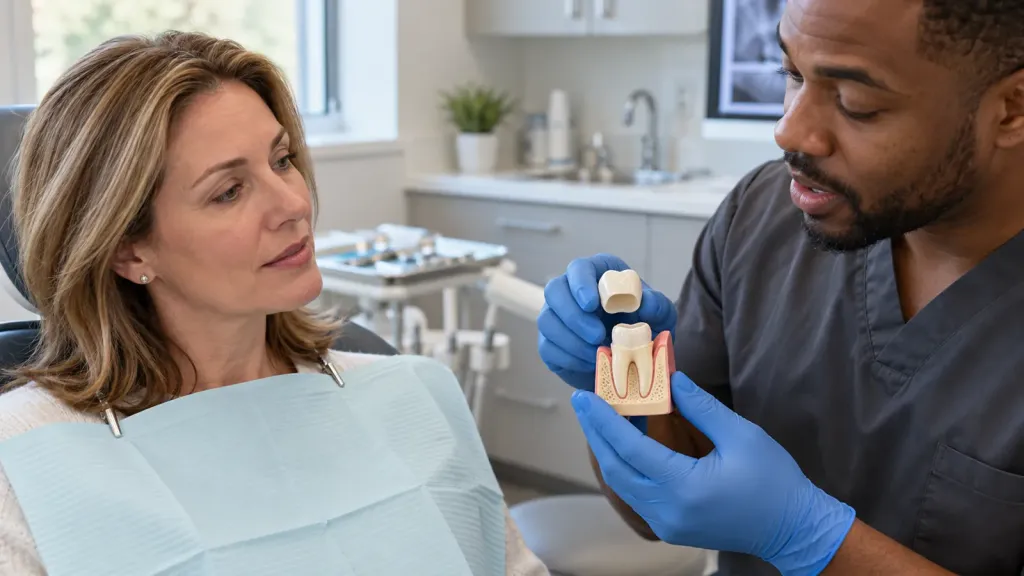
You expected an appointment for a crown. Instead, your dentist has suggested seeing a gum specialist first. It is understandable to wonder why treating the gum would be part of repairing a tooth.
Sometimes the difficulty is not the crown itself. There may be too little accessible, sound tooth structure above the gum for the planned restoration. Crown lengthening can be considered to improve access to that structure.
It is a separate procedure with a specific purpose, and it is not needed for every crown. At Downtown Periodontal Group in Vancouver, the discussion should connect the periodontal treatment to the work your restoring dentist plans to provide.
Crown lengthening and a dental crown are different
A dental crown is a restoration that covers a prepared tooth. Crown lengthening changes the relationship between the tooth and the surrounding gum, sometimes with adjustment of the supporting bone.
Despite the name, crown lengthening does not stretch a tooth or simply order a taller artificial crown. It makes more of the existing tooth accessible.
The procedure can be used for different reasons. For this situation, the important question is restorative: would changing the surrounding tissues help the dentist restore the damaged tooth appropriately?
The University of Toronto’s patient information on crown lengthening describes its role in preparing teeth for restorative care. Your own recommendation should explain what problem the procedure is intended to solve and how it fits into the overall treatment sequence.
Why a damaged tooth may need more accessible structure
A tooth can need a crown because of damage or decay, yet still present a challenge at its edges. If the area to be restored extends deeply below the gum, the dentist may have difficulty accessing enough suitable tooth structure for the restoration.
The goal is not simply to cover what is visible. The dentist also needs to consider where the restoration will meet the tooth and how that area relates to the gum and bone.
Downtown Periodontal Group’s crown lengthening information explains this connection between accessible tooth structure and restoration planning.
Ask your dentist to show you the area of concern on an image or diagram. “The edge of the damage is here” is often easier to understand than a list of technical terms. You can then ask what would change after crown lengthening and what limitations would remain.
Crown lengthening is not a guarantee that a tooth can be saved. The overall condition of the tooth still matters, and the team may need to discuss alternatives.
What the gum specialist assesses
A gum specialist, or periodontist, evaluates more than the visible gum line. The assessment considers the tooth, the surrounding tissues and the requirements of the proposed restoration.
Your referral and dental records help explain why the restoring dentist requested the consultation. Bring details of previous work on the tooth, symptoms you have noticed and your current medications. If you do not know whether records have been transferred, ask the offices to confirm.
The consultation is also the time to discuss what the procedure could involve in your case. Would gum tissue alone be adjusted, or would bone need to be reshaped? Could neighbouring areas be involved? What changes might you notice afterwards?
Those questions require an individual assessment. A description of someone else’s procedure, even on the same type of tooth, cannot establish what your treatment will involve.
Ask the periodontist to distinguish the intended benefit from the uncertainties. You should understand why the procedure is being considered and what findings could change the plan.
How the periodontist and restoring dentist coordinate
The periodontal procedure and the final crown are connected, but they are different stages of care. The periodontist addresses the tissues around the tooth; the restoring dentist plans and provides the final restoration.
Before treatment, clarify whether the two providers have agreed on the proposed approach. Ask which office will explain the sequence and who will let you know when the tooth is ready for the next stage.
Healing has to be assessed before final restorative decisions are made. Avoid assuming that the final crown can be fitted on a fixed date simply because a general website gives an example timeline.
It is also worth discussing how the tooth will be managed between appointments. Ask whether a temporary restoration is planned, which office provides it and whom to contact if it becomes loose or uncomfortable.
Keeping these responsibilities clear reduces the chance of finishing one appointment without knowing what comes next. Request written instructions and appointment details if you find it difficult to remember information during dental visits.
Questions to ask before agreeing to treatment
Start with the decision itself: why is crown lengthening recommended for this tooth, and what are the reasonable alternatives?
You can ask the team to compare the expected benefits, limitations and stages involved. If you are unsure about proceeding, say so. A consultation is an opportunity to understand the recommendation before making a decision.
Ask about the complete treatment estimate as well. Periodontal surgery and the final crown may be billed by different offices. Find out what each estimate includes and whether additional visits or temporary restorations are listed separately.
Finally, discuss practical arrangements. Ask about recovery instructions, follow-up visits and when you should seek advice about a concern. Follow the instructions given for your own procedure rather than borrowing a friend’s recovery routine.
Questions to Ask at Your Appointment
These questions can help you leave with a clear plan:
- What prevents the tooth from being restored as it is now?
- What would crown lengthening change?
- Will gum tissue, bone or both need adjustment?
- What limitations or alternatives should I understand?
- Who manages the tooth while the tissues heal?
- How will you decide when the final crown can be made?
- Which office should I call with a problem between visits?
If you receive an answer such as “it depends on healing,” ask how and when healing will be checked. That turns a general explanation into a practical next step.
Frequently Asked Questions
Does every dental crown require crown lengthening?
No. Many teeth can be restored without it. The recommendation depends on the tooth structure available and its relationship to the surrounding tissues.
Is this the same as getting a longer dental crown?
No. Crown lengthening is a procedure involving the tissues around the tooth. The final dental crown is a separate restoration made to fit the prepared tooth.
Will gum tissue or bone need to be adjusted?
That depends on the assessment and treatment plan. Ask the periodontist what is proposed for your tooth rather than assuming the procedure involves gum tissue alone.
When can the final crown be placed?
Your providers will decide based on the procedure, healing and restorative requirements. Confirm the review appointments and avoid treating a general timeline as a personal guarantee.
Who should I contact about the final restoration?
Contact the dentist providing the final crown. Your periodontist and restoring dentist should coordinate the transition, and you can ask each office to clarify its responsibilities.
Talk to Downtown Periodontal Group
If your dentist has recommended crown lengthening, you do not need to arrive knowing every detail of the procedure. Contact Downtown Periodontal Group to discuss the referral, the reason for treatment and how the Vancouver periodontal team will coordinate with your restoring dentist.